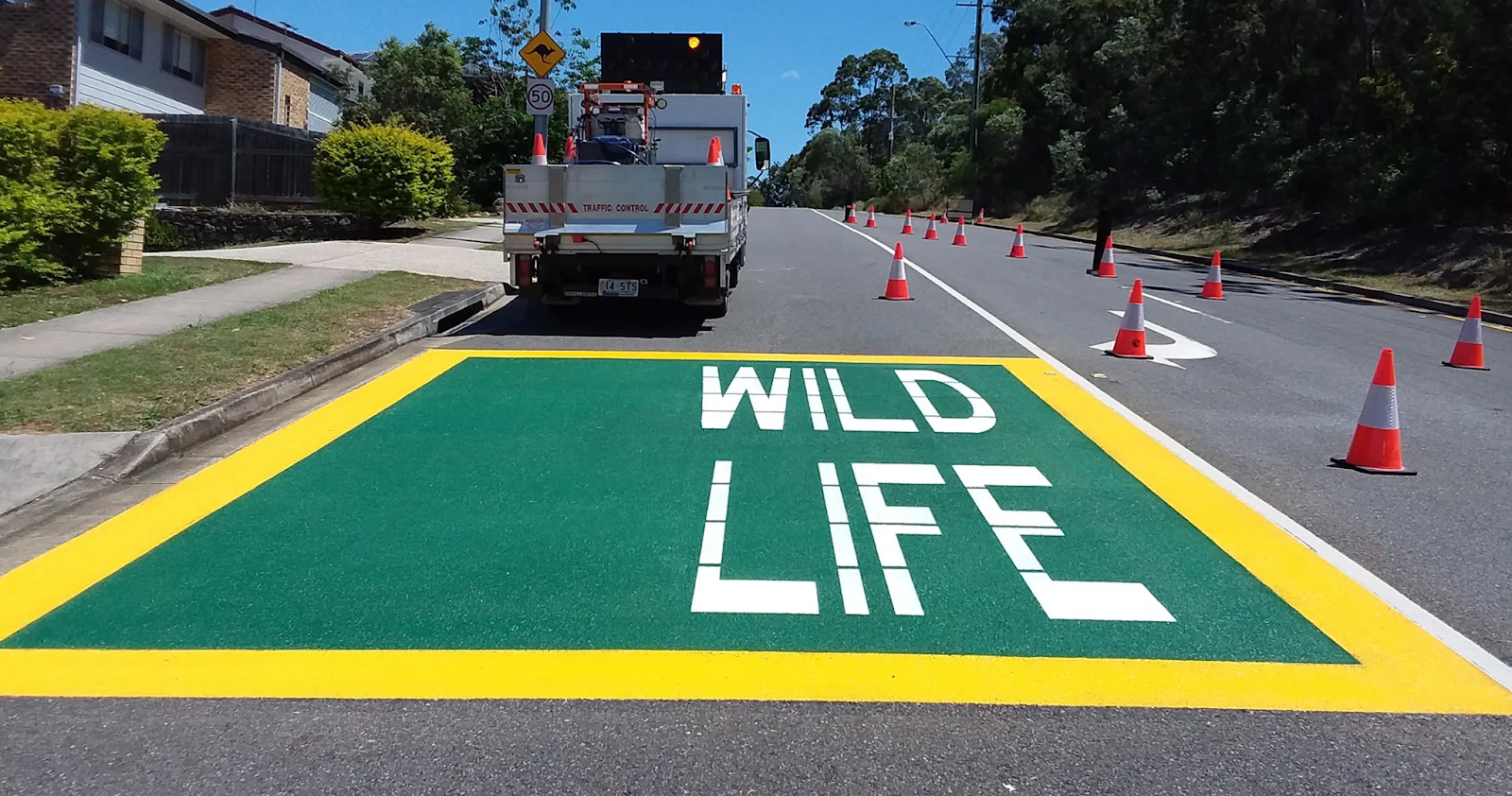
Coloured road surfacing is widely used across Australian road networks to improve lane discipline, visibility, and safety in areas with complex traffic movements.
What Is Coloured Road Surfacing?
Coloured road surfacing is a thin-layer skid-resistant treatment applied to sound asphalt or concrete that uses resin-based binders and coloured aggregates or pigments to improve lane visibility, strengthen delineation, and influence driver behaviour in high-conflict road environments.
Coloured surfacing is not paint or line marking. It forms a durable, bonded surface layer that covers defined road areas rather than providing directional guidance alone. Its primary purpose is to increase awareness, reinforce lane function, and support safer movement by clearly separating traffic types and priority zones.
Why Lane Discipline and Driver Awareness Matter
Lane discipline and driver awareness reduce conflict, confusion, and crash risk in areas where traffic movements are complex and space is shared between different road users.
Poor lane discipline typically results in:
- Weaving between lanes
- Sudden braking in response to late decisions
- Encroachment into priority lanes, such as bus or cycle lanes
These behaviours commonly occur in:
- Intersections
- Bus lanes
- Cycle lanes
- Shared zones
Improving how drivers recognise and respond to lane function supports safer, more predictable traffic flow in these environments.
Why Lane Discipline and Driver Awareness Matter
Coloured surfacing influences driver behaviour by providing immediate visual cues that define lane purpose and movement priority.
High-contrast colours improve visual recognition, allowing drivers to identify lane function earlier and with greater certainty. This clarity reduces hesitation, limits last-second manoeuvres, and supports smoother decision-making in areas where traffic movements converge or change direction.
Colour in road surfacing acts as a behavioural signal, not a decorative feature. By clearly distinguishing priority lanes, conflict zones, and shared spaces, coloured surfacing guides drivers to respond appropriately and maintain consistent lane discipline.
Where Coloured Surfacing Is Used (Common Applications)
Coloured surfacing is applied in locations where clear visual delineation improves safety, reduces conflict, and supports predictable driver behaviour.
| Location Type | Safety Issue | How Colour Helps |
| Bus lanes | Vehicles encroaching into priority lanes | Clearly defines bus-only zones and improves lane compliance |
| Cycle lanes | Poor visibility and vehicle encroachment | Increases cyclist visibility and separates cycle movements from traffic |
| Pedestrian crossings | Low driver awareness and delayed reactions | Highlights crossing points and prompts earlier driver response |
| Conflict zones at intersections | Unclear movements and late decision-making | Reinforces lane priority and guides turning behaviour |
| Slip lanes and merge points | Sudden lane changes and loss of control | Improves recognition of merging areas and reduces hesitation |
| School zones | High pedestrian activity and speed inconsistency | Draws attention to reduced-speed environments and vulnerable users |
| Transit corridors | Mixed vehicle types and frequent stopping | Supports orderly traffic flow and consistent lane use |
Colours Used in Road Surfacing and What They Communicate
Specific colours are used in road surfacing to communicate lane function and priority at a glance, helping drivers recognise how a space is intended to be used without relying on signage alone.
| Colour | Typical Use | Purpose |
| Red | Bus lanes, transit priority corridors | Signals restricted or priority use and reinforces lane discipline |
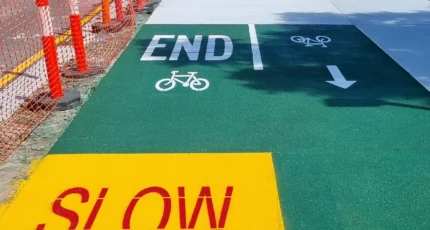
| Green | Cycle lanes, bicycle conflict zones | Highlights cyclist presence and separates cycle movements from traffic |
| Blue | Accessible parking areas, special access zones | Improves visibility of designated access spaces |
| Yellow | Caution areas, conflict zones, approaches to crossings | Draws attention to areas requiring increased driver awareness |
These colours act as visual cues rather than regulatory markings, supporting faster recognition and clearer decision-making in environments with mixed or changing traffic movements.
Coloured Surfacing vs Line Marking
Coloured surfacing differs from line marking by covering the full lane area rather than providing directional guidance alone, making lane purpose and priority clearer from a greater distance.
Coloured surfacing offers stronger visibility, particularly in wet or low-light conditions, because the colour fills the entire lane rather than relying on narrow painted lines. This broader coverage reinforces behaviour more effectively, helping drivers maintain correct lane position and reducing encroachment into priority zones.
In high-traffic environments, coloured surfacing also delivers greater durability than standard line marking, retaining visibility for longer under repeated braking and turning movements. Line marking remains essential for directional guidance and regulatory information, while coloured
Performance and Safety Benefits of Coloured Surfacing
Key benefits include:
- Improved lane recognition in wet and low-light conditions, where high-contrast colour helps drivers identify lane function earlier than line marking alone.
- Reduced lane encroachment in priority corridors, such as bus lanes and cycle lanes, by clearly defining areas intended for specific road users.
- Clearer separation of vehicle, bus, and cycle movements, which lowers conflict and supports safer interaction in mixed-traffic environments.
- Strong friction performance when anti-skid aggregates are used, improving braking control and reducing skid risk, particularly during wet-weather conditions.
How GRM Systems Delivers Coloured Road Surfacing
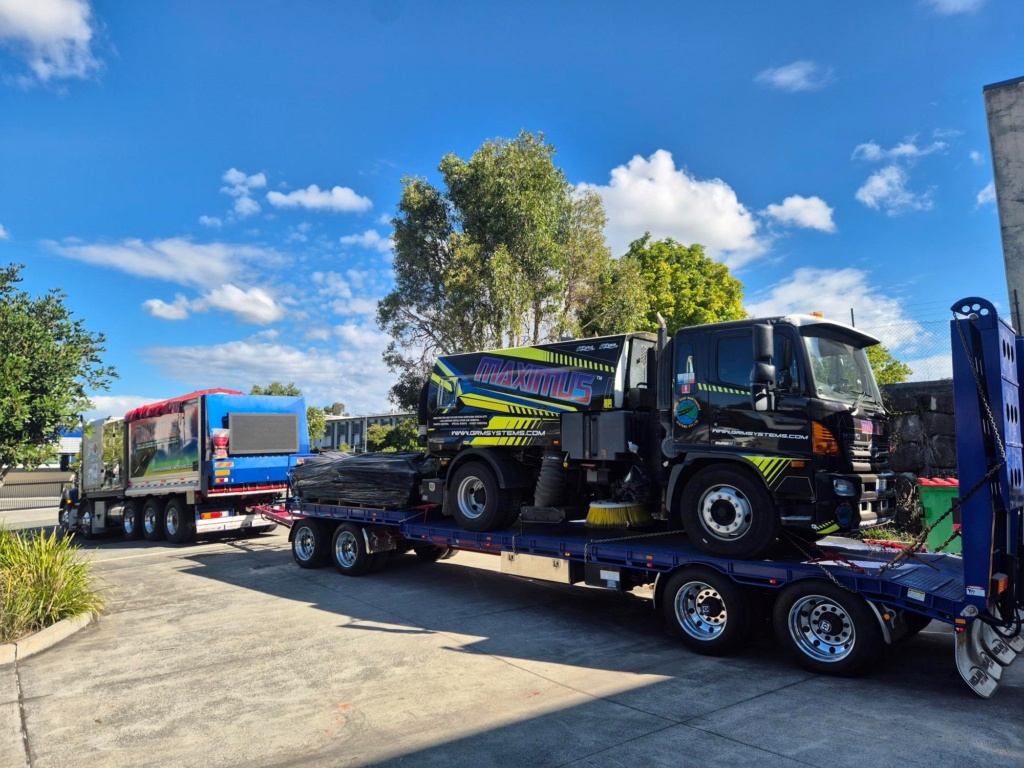
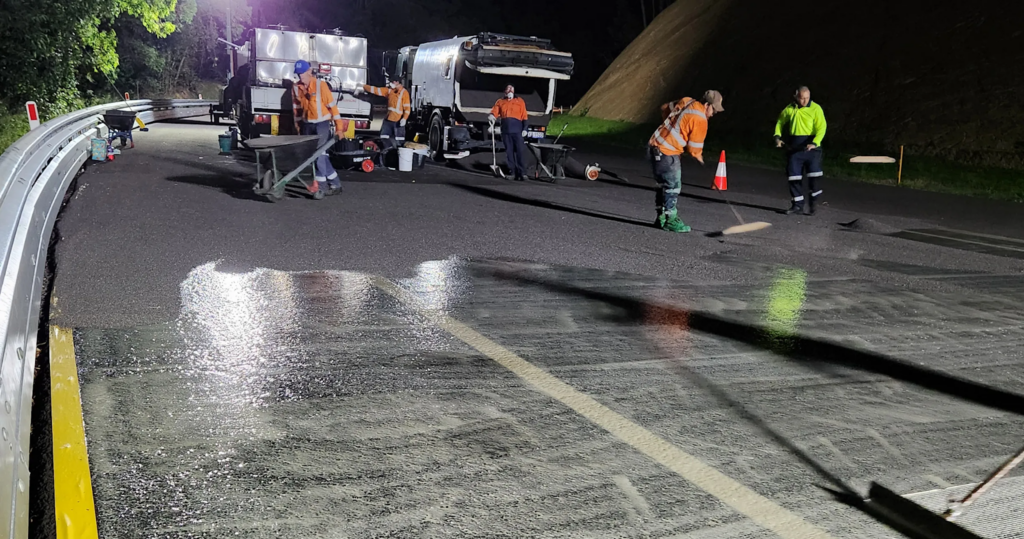
GRM Systems delivers coloured road surfacing across Australia through specialist crews and established delivery processes that support safe, consistent outcomes on active road networks. Our OzSpray CST and OzGrip CST systems offer exceptional skid resistance, long-lasting colour retention, and seamless application.
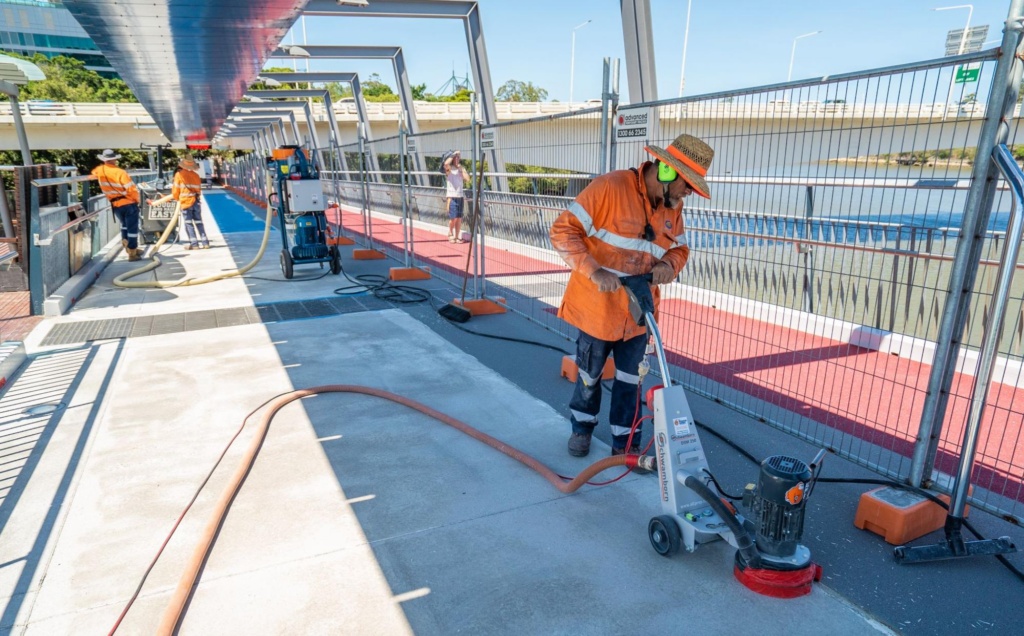
With national capability, GRM applies coloured surfacing on a wide range of projects, integrating this work seamlessly with high-friction surface treatments, line marking, bridge works, traffic management and more to ensure clear delineation and safe traffic flow during and after installation.
GRM Systems has experience delivering coloured surfacing for councils, state road authorities, and civil contractors, applying treatments to sound pavements where improved visibility, lane discipline, and driver awareness are required. This integrated, practical approach allows GRM to support targeted safety upgrades without unnecessary pavement replacement or disruption.