What Is High-Friction Surface Treatment?
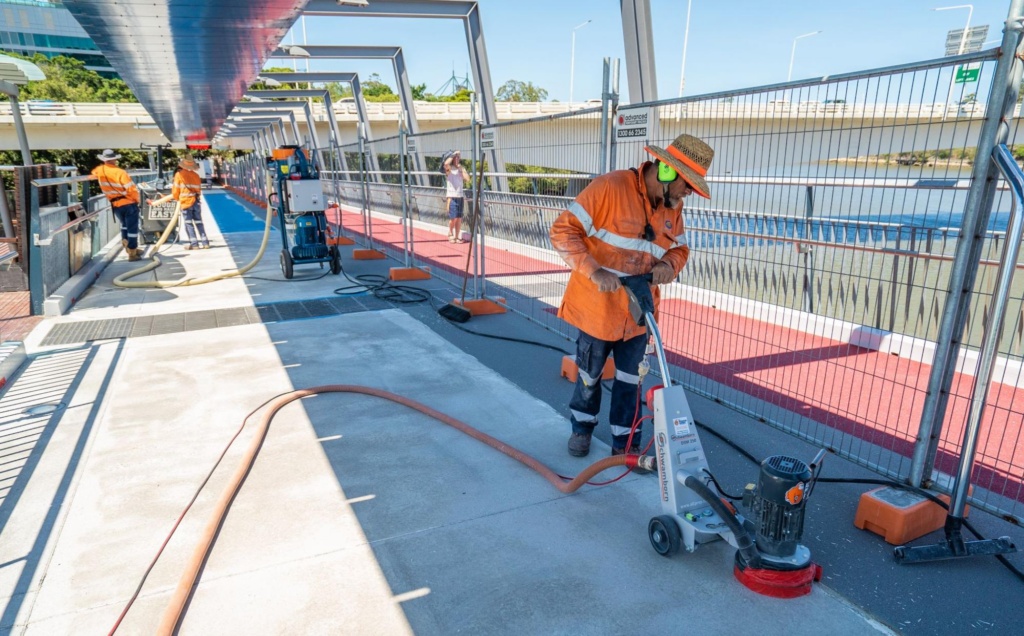
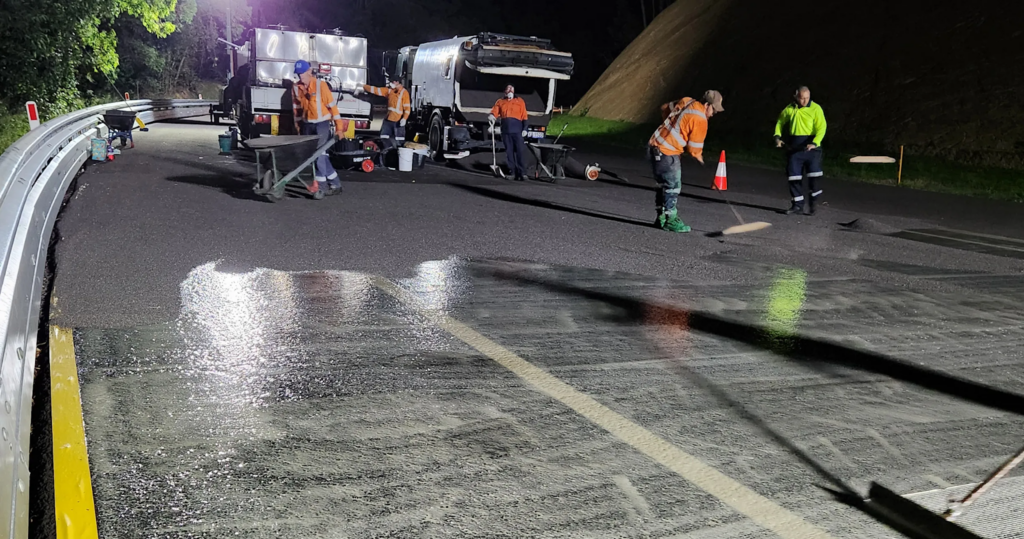
High-Friction Surface Treatment (HFST) is a thin-layer safety treatment made from a resin-binder system and calcined bauxite aggregate. It is applied to sound pavements to significantly increase skid resistance in high-risk locations without replacing the existing road surface.
HFST creates a hard, durable, high-texture surface that improves tyre grip during braking, cornering, and wet-weather conditions. It bonds directly to asphalt or concrete and is commonly used on intersections, roundabouts, sharp curves, steep descents, and pedestrian-heavy areas where drivers rely heavily on friction for safe control.
Why HFST Improves Road Safety
HFST improves safety by increasing surface friction, reducing stopping distances, and strengthening vehicle control in both dry and wet conditions.
By forming a high-texture surface on structurally sound asphalt or concrete, HFST reduces skid-related incidents at locations where drivers brake or change direction quickly. Australian and international research recognises HFST as a proven treatment for improving skid resistance and reducing loss-of-control crashes on high-risk sites, particularly in wet weather.
Because HFST is applied as a thin overlay rather than a structural resurfacing method, it delivers safer performance without the cost, disruption, or downtime associated with pavement replacement.
Where HFST Is Used (High-Risk Locations)
HFST is used on locations where braking, cornering, or wet-weather conditions create higher crash risk. The table below outlines common sites, the safety issues they present, and why HFST is effective.
| Location Type | Safety Issue | Why HFST Works |
| Approaches to signalised intersections | Heavy braking, rear-end crashes, wet-weather skidding | High friction shortens stopping distances and improves control during sudden braking |
| Roundabouts | Low-speed wet-weather crashes, loss of control | Consistent friction through curved paths and braking zones |
| Sharp horizontal curves | Run-off-road crashes, vehicle drift | High friction stabilises tyre grip and supports safer cornering |
| Steep downhill grades | Long braking distances, brake overheating, wet-weather skids | Increased friction supports controlled braking on descents |
| Busways and transport corridors | Frequent stopping, heavy braking | Durable, high-friction surface withstands repeated braking cycles |
| Pedestrian-heavy zones | Vulnerable road users, mixed traffic movements | Enhanced grip reduces skid risk and improves control |
| High-speed exits and merge lanes | High-speed lane changes, loss of control | Improved traction supports acceleration, deceleration, and lateral movements |
These locations benefit most because drivers depend heavily on friction for safe navigation.
How HFST Works (The Science Behind It)
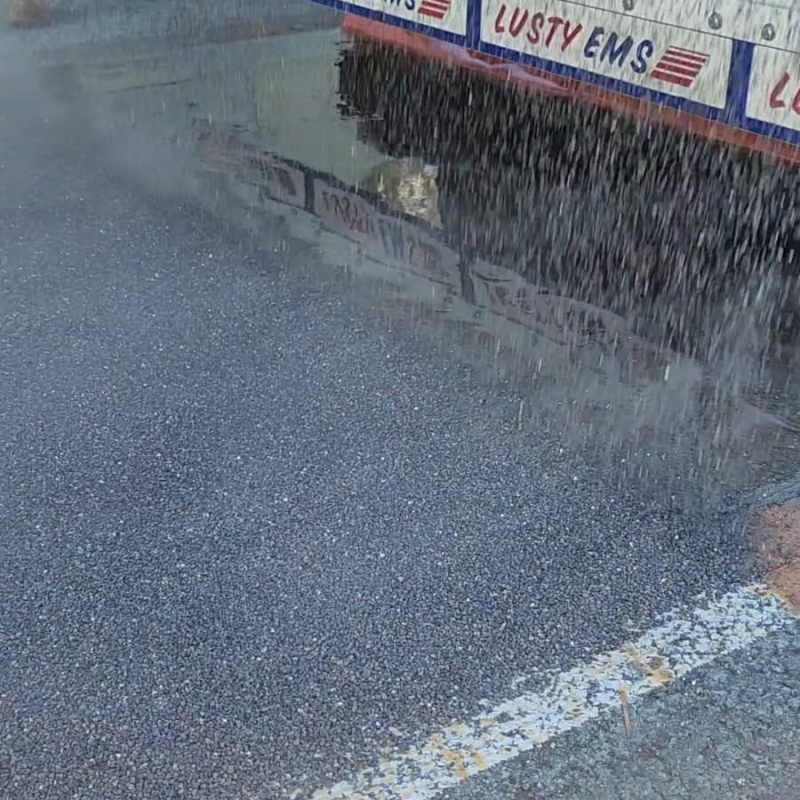
HFST improves safety by forming a thin, high-friction surface made from a resin-binder system and calcined bauxite aggregate. This overlay bonds directly to sound asphalt or concrete and significantly increases tyre grip in both dry and wet conditions.
Its performance comes from enhanced microtexture and macrotexture:
- Microtextureimproves low-speed grip and wet-weather braking.
- Macrotexturedisperses water at higher speeds and reduces hydroplaning risk.
Calcined bauxite typically provides a skid resistance value above 70, far higher than conventional asphalt. Because the aggregate is extremely hard and wear-resistant, friction levels remain high over time, even on sites exposed to frequent braking and turning.
HFST vs Traditional Surfacing: What Makes HFST Different?
HFST differs from traditional surfacing because it is designed for targeted safety improvement, not pavement restoration. Traditional surfacing restores pavement condition, while HFST enhances friction on pavements that are already structurally sound.
| Category | HFST | Traditional Surfacing (Asphalt/Spray Seal) |
| Material Composition | Resin-binder system with calcined bauxite (SRV >70) | Bitumen-based asphalt or sprayed binder with aggregate |
| Primary Purpose | Increase skid resistance at high-risk sites | Restore surface condition and pavement structure |
| Application Method | Thin-layer applied to sound pavement | New surface layer over existing pavement |
| Thickness | 3–5 mm | 30–50 mm (asphalt), variable (spray seal) |
| Friction Performance | Extremely high, long-lasting friction | Standard friction for general roads |
| Crash Reduction Outcomes | Recognised globally for reducing skid-related crashes | Not designed specifically for crash reduction |
| Time to Return to Service | Fast curing; often same-day reopening | Longer cooling/curing times |
| Cost-Effectiveness | Highly cost-effective for safety-focused upgrades | More costly and unnecessary if pavement is structurally sound |
Performance Benefits of HFST
HFST delivers clear performance benefits by increasing skid resistance, shortening braking distances, and maintaining high friction over time.
- Friction improvement:Typical asphalt may provide SRV levels in the low 40s, while HFST delivers SRV values in the high 70s.
- Improved wet-weather safety:Increased friction lowers the likelihood of skidding in wet conditions.
- Better braking control:Drivers experience shorter stopping distances on treated sites.
- Long-term performance:Calcined bauxite retains hardness and texture longer than conventional surfacing.
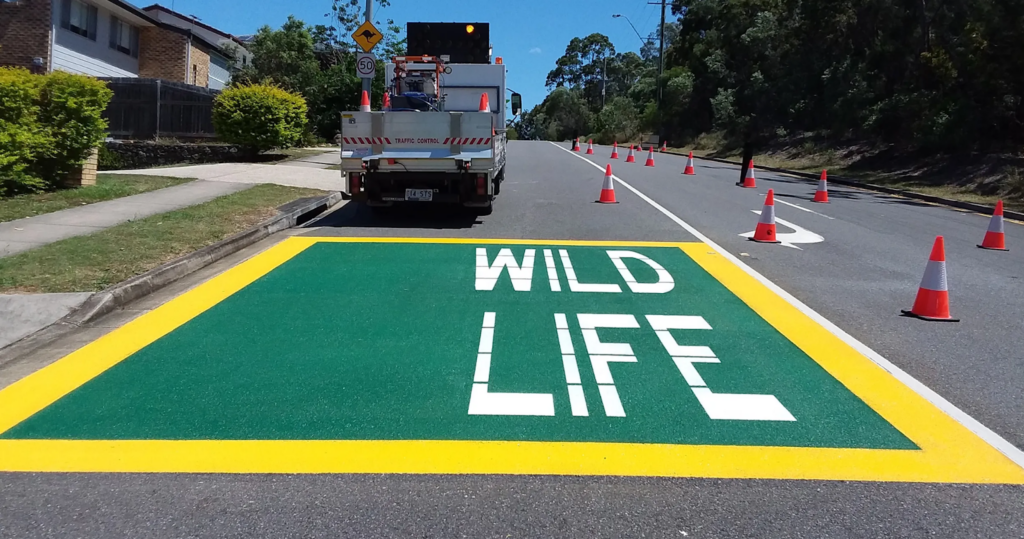
- Visibility benefits: Coloured HFST treatments enhance lane awareness and guide behaviour through conflict zones such as merges, bus lanes, and cycle areas
HFST on Sound Pavements: Why It’s the Preferred Safety Upgrade
HFST is the preferred solution for high-risk sites because it improves safety without replacing the pavement. The treatment targets friction issues directly, making it ideal for locations with skid patterns, braking issues, or wet-weather crash histories.
HFST installs quickly, often within a single shift, which minimises road closures and network disruption. It is also highly cost-effective for safety upgrades where the pavement remains structurally sound.
By providing significant friction improvements with minimal downtime, HFST offers a practical and proven way to enhance safety on targeted, high-risk road locations.
How GRM Systems Delivers HFST Across Australia
GRM Systems delivers HFST across Australia through certified processes, specialist crews, and more than 20 years of experience applying high-friction treatments on high-risk road locations. The company is recognised as one of Australia’s largest HFST installers, trusted for its technical capability and consistent safety outcomes.
GRM operates with national coverage, deploying trained HFST teams equipped to complete work efficiently on intersections, roundabouts, steep grades, and other high-risk sites. Their accredited systems ensure every installation meets required performance standards, with rigorous preparation, application, and quality-control procedures.
As a long-standing partner to councils, state road authorities, and civil contractors, GRM Systems has a proven track record in delivering HFST as a targeted safety treatment for sound pavements. Their industry partnerships and commitment to safety make them a leading provider for road networks seeking reliable friction improvement and strong, long-term performance.